

Termite Treatment in Elgin, IL
Eastern subterranean termites are an active concern across Elgin, particularly as spring and summer pest activity peaks, making early detection and treatment critical to protect your home's structural integrity. Dodd Pest Control connects Elgin property owners—from historic neighborhoods like Gifford Park to areas throughout the city—with local pest control providers who specialize in termite treatment tailored to your specific situation. Getting connected to a local provider quickly means addressing an infestation before it causes costly damage.
When do termites swarm in Elgin, IL?
Two things decide when you see a pest: what the species does, and what the weather here actually does. Below is the published guidance on the first, set against this city's own measured climate.
“Native subterranean termites begin swarming in February/March, swarm during the day, and are not attracted to lights.” UGA Extension
“Formosan termites (1) swarm at night; (2) swarm in late May and/or early June (in Georgia), and (3) swarmers are attracted to light.” UGA Extension
“In Pennsylvania, swarms of winged termites usually emerge between February and June.” Penn State Extension
The behavior is the part that travels: a swarm in daylight that ignores a porch light is a native subterranean termite, while a swarm after dark drawn to the light is Formosan. The months do not travel — the same native species begins in February or March in Georgia but can emerge any time from February to June in Pennsylvania, so the dates below matter more than either range.
In Elgin the average last spring freeze falls on April 26, and the frost-free stretch runs to October 18 — about 174 days.Source: NOAA 1991-2020 Climate Normals, ELGIN, IL US station (1.8 mi from Elgin)

Termite Treatment Services for Elgin Homeowners
Eastern subterranean termites are a significant concern for homeowners throughout Elgin, particularly as spring and summer arrive and pest activity peaks across the region. These destructive insects work quietly within wood structures, often causing extensive damage before a homeowner even realizes an infestation is underway. Because termite colonies can remain active year-round in Illinois homes, early detection and prompt treatment are essential to protect your property's structural integrity and prevent costly repairs down the line.
Dodd Pest Control connects Elgin property owners with local pest control providers who specialize in thorough termite treatment tailored to your home's specific situation. These independent professionals assess the extent of termite activity, identify entry points and affected areas, and develop a targeted treatment plan designed to eliminate the colony and help prevent future infestations. Whether your home is in Downtown Elgin, College Park, or another neighborhood in the area, the providers in our network offer responsive, local service and follow-up care to keep your property protected. When you need reliable termite treatment, we make it simple to find and connect with experienced professionals ready to address the problem.
Why Elgin Homeowners Choose Dodd for Termite Treatment
Fast Local Termite Treatment Response
Termite Treatment works best when started quickly. Dodd connects you with independent local providers in Elgin who respond promptly to termite concerns, minimizing the window for colony expansion and structural risk.
Thorough Termite Treatment Inspections
Effective Termite Treatment begins with a complete property assessment. The independent providers Dodd connects you with conduct detailed inspections to locate active termite activity and entry points before recommending a treatment approach.
Clear Communication Throughout Treatment
Termite Treatment can feel technical and stressful. Dodd partners with local providers who explain findings, treatment steps, and next steps in straightforward language so you understand what's happening to your home.
Termite Treatment for Spring Activity Peaks
Eastern subterranean termites in the Elgin area grow more active as temperatures warm in spring and summer. Scheduling Termite Treatment during these peak seasons—or earlier—helps protect your property when pest pressure is highest.
How Our Termite Treatment Works
Schedule Your Termite Treatment Visit
Contact Dodd Pest Control to connect with a local pest control provider in Elgin who offers termite treatment. We'll help arrange a convenient time for an inspection of your property.
Receive Your Termite Diagnosis
The provider will conduct a thorough inspection to identify termite activity, damage, and entry points specific to your home. Eastern subterranean termites are a known concern in the Elgin area, and a detailed assessment determines the scope of treatment needed.
Begin Termite Treatment & Monitoring
Your provider will recommend and implement a termite treatment plan tailored to your infestation. Follow-up inspections and monitoring help ensure the termite treatment remains effective over time.
Ready to get rid of termites in Elgin? A local provider can get started fast.
Call (847) 994-0807Termite Treatment Across Elgin's Neighborhoods
Eastern subterranean termites are a recognized pest threat throughout the Elgin area, and the risk of infestation varies significantly depending on where a property is located and how old its structure is. Established neighborhoods with mature trees and older homes—such as those in the Gifford Park Historic District and Spring-Douglas Historic District—often present different termite pressures than newer residential areas. Aging construction, particularly wood elements in foundations and framing, can be more vulnerable to termite activity, making early detection and professional termite treatment especially important for properties in these areas.
Pest activity in Elgin follows distinct seasonal patterns, with termite concerns typically building during warmer months when colonies become more active. Property owners should remain alert during spring and summer, when conditions favor both termite emergence and the spread of infestations. A local pest control provider connected through Dodd Pest Control can assess your home's specific risk factors—its age, construction details, and proximity to trees—and recommend an appropriate termite treatment strategy tailored to your property's vulnerabilities.
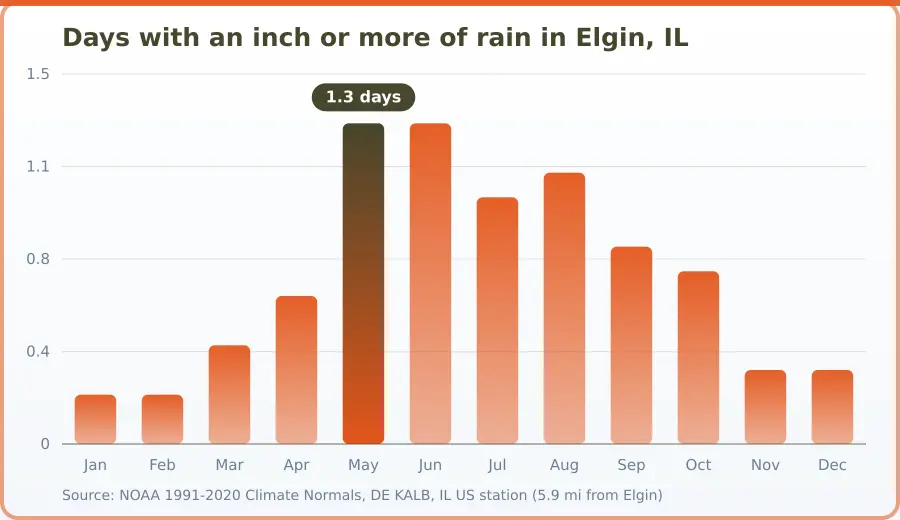
| Period | Days with an inch or more of rain (days) |
|---|---|
| Jan | 0.2 |
| Feb | 0.2 |
| Mar | 0.4 |
| Apr | 0.6 |
| May | 1.3 |
| Jun | 1.3 |
| Jul | 1 |
| Aug | 1.1 |
| Sep | 0.8 |
| Oct | 0.7 |
| Nov | 0.3 |
| Dec | 0.3 |
Source: NOAA 1991-2020 Climate Normals, DE KALB, IL US station (5.9 mi from Elgin). Retrieved October 5, 2026.
Year-Round Termite Treatment Timing in Elgin
Spring: Emerging Activity
As Elgin passes its average last freeze on April 26, termite colonies emerge from dormancy and swarmers begin seeking new nesting sites. Dodd Pest Control connects homeowners with local providers who conduct thorough inspections and treatment before populations peak, protecting your home during this critical window.
Summer: Peak Treatment Demand
With up to 4.3 days above 90°F in July, warm conditions accelerate termite metabolism and colony expansion. Visible damage and swarm activity increase, making professional termite treatment urgent. Dodd Pest Control links property owners to nearby providers equipped to handle active infestations before structural damage compounds.
Fall: Pre-Winter Preparation
Eastern subterranean termites remain active through Elgin's first autumn freeze around October 18, with steady rain averaging 5.8 days that month providing moisture termites need. Fall treatment prevents colonies from establishing permanent positions in wood before winter dormancy, and Dodd Pest Control connects you with local providers ready to act.
Winter: Dormancy and Deep Inspection
Cold nights—averaging 28.1 freezing nights in December—slow termite movement, but colonies survive within protected wood and soil. Winter is ideal for thorough inspections and preventative treatment planning. Dodd Pest Control helps you find local termite specialists who use the slower season to assess damage and prepare treatment strategies for spring reactivation.
Related Services
Termite Treatment FAQs — Elgin, IL
Termite treatment typically begins with a thorough inspection to locate active colonies and damage. The local provider will assess the infestation's scope, then apply targeted treatments—often using soil barriers or direct applications to affected wood and entry points. You'll receive a detailed report and recommendations for follow-up inspections to confirm the treatment's effectiveness over time.
Dodd Pest Control connects you with independent local termite treatment providers in Elgin who typically respond quickly to active infestations. Once you contact us with details about your situation, we match you with a nearby provider who can often schedule an inspection within days, depending on current demand and your availability.
Termite treatment pricing depends on factors like the infestation's severity, the area of your property requiring treatment, the type of structural access needed, and the treatment method used. Larger infestations or multiple treatment visits typically cost more than smaller, localized problems. The independent provider will give you a clear estimate after inspection.
Before treatment, the provider will give you specific preparation instructions—typically including moving items away from treated areas, sealing food and pets in safe rooms, and ensuring access to infested zones. You may need to vacate briefly during application. Ask your provider about post-treatment precautions and when it's safe to re-occupy treated spaces fully.
After treatment, reduce termite attraction by eliminating wood-to-soil contact, fixing moisture problems, and removing dead wood or mulch near your foundation. Seal cracks in exterior walls and maintain proper drainage. Many homeowners schedule periodic re-inspections to catch early warning signs before a new colony establishes, catching problems fast.
In the Elgin area, termite activity peaks during spring and summer months when colonies are most active and visible. However, eastern subterranean termites can cause damage year-round if already established in your home. If you notice signs of termites during warmer months, scheduling treatment promptly prevents significant structural damage from developing through fall and winter.
Homeowner Safety Toolkit
Verify Your Elgin, IL Pest Control Company
Before you hire anyone, use these independent national resources to confirm credentials, standards, and track record.
NPMA
QualityPro is the pest control industry's own accreditation program, endorsed by the National Pest Management Association. Find and verify a company's accreditation before you hire.
Find a Certified ProBBB
Look up any pest control company's complaint history, customer reviews, and accreditation status — a free, independent check before you hire.
Check StandingEPA
The federal government's own guide to choosing a pest control method and using pesticides safely around your home and family.
Pesticide Safety GuideDealing with termites in Elgin? Get fast, targeted treatment from a local provider.
Call (847) 994-0807Areas We Serve in Elgin, Illinois
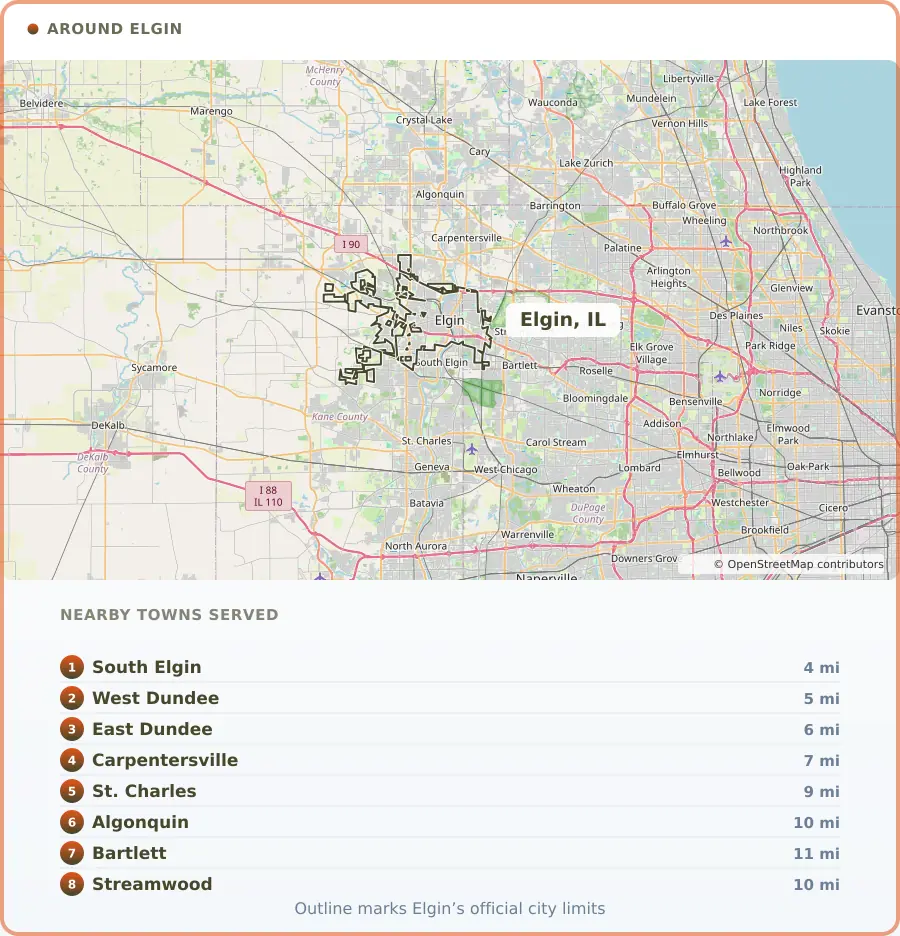
Coverage centres on Elgin, IL and reaches 8 surrounding communities. Response time is what matters most in the hours after a problem is found, so knowing the ground is part of the job.
Elgin, IL Information
Elgin sits along the Fox River in Kane County, a sturdy, working city within Chicago's larger orbit of about 114,797 people. Its economy runs on real variety rather than one dominant industry: Advocate Sherman Hospital and School District U-46 anchor healthcare and education, the Grand Victoria Casino brings steady hospitality jobs, and manufacturers like Elgin Sweeper Company and Koch Foods keep the city's industrial roots alive. City and county government round things out, giving Elgin a grounded, self-sufficient economic identity.
That mix shows in its neighborhoods, too. Downtown Elgin carries the river city's historic backbone, while areas like the Gifford Park Historic District and Bowes Creek Country Club show how old brick character and newer suburban living sit comfortably side by side here.

Photo: Chris Light, CC BY-SA 4.0